The release period building up to the Super Mario Galaxy Movie's release have been interesting, to say the least. To describe it as "archaic," would be doing it a disservice, as series fans (myself included) have shared the strangest sense of whiplash seeing the mixed reviews surrounding the films early legacy. From scathing abhorrence to hopeful acknowledgement, it's certainly been a strange time to be a Mario fan, especially when you consider the film's aim to mark the series' 40th anniversary.
And yet, having watched it twice on release day, I find myself in a precarious position regarding my final verdict on this film. Having grown up considering the original Mario Galaxy games as a core childhood memory, I've noticeably grown a lot harsher towards the faithfulness of this film's attempts at being an adaptation for a game I hold dearly.
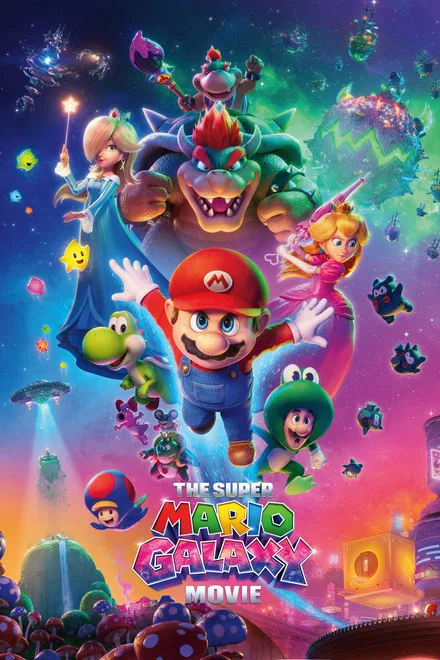
Rather than writing a direct review, I wanted to go all-in on my thoughts surrounding The Super Mario Galaxy Movie. To that end, this blog post aims to be less of a critique and more of a discussion surrounding this film's execution, alongside its faithfulness in upholding its original game's legacy. Because as was the case with the first installment, I can easily say has lived up to being one of my fondest cinema experiences - but even some as Nintendo-pilled as myself has come to realise the fatal flaws behind this movie's overall execution.
Moving forward, it should be worth noting that this blog post will contain film spoilers. As I mentioned once before, the Mario Galaxy games mean a lot to me. If I want to engage with this film in good faith, I want to be free from the shackles of spoilers that would typically bind a traditional review. To that end, please don't expect me to hold back. I'm going all-in! >:D
A Gaming Classic Aiming for Cinematic Triumph…
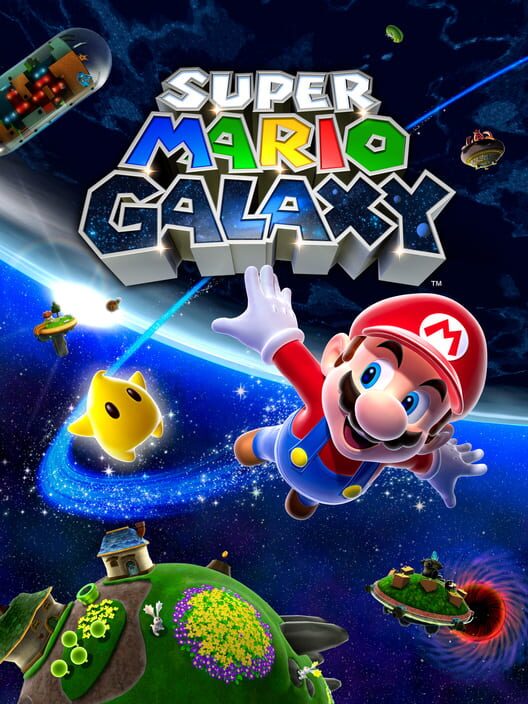
To begin with, it's worth bringing up that while typically associated as a series putting story second over gameplay, the original Mario Galaxy game thrived upon its melancholy undertones, unique level design and oftentimes memorable series iconography that's managed to remain present in the franchise long after the original game's release. For me to properly critique The Mario Galaxy Movie, I first want to recount the importance of the legacy surrounding its original game.
Put bluntly, the original Mario Galaxy game still boasts one of the most engaging stories to date within its mainline instalments. Not only did the original game have the audacity to implement one of the series' most iconic and (ironically) cinematic opening sequences to date, going as far as to have Bowser quite literally lifting Peach's castle from the sky before knocking Mario out into spacial orbit - but the game also carries the weight of one of the series' most tragic characters, being that of the enigmatic, yet mysterious Princess Rosalina.
Put simply, it's a game that thrives in the feeling of its seemingly hopeless melancholy. For a majority of the player's journey, Mario spends his time traveling from galaxy-to-galaxy, helping the distant space guardian, Rosalina, by powering up her starship (aptly titled the Comet Observatory) in order to reunite and rescue the kidnapped Princess Peach from Bowser's clutches. Along the way, he'll enlist the help of various star children, known as lumas to help launch him across various galaxies, while gradually meeting (and reuniting) with unlikely characters.
This all seems fairly standard, all things considered, but it's worth noting that just as sound doesn't travel through space, so too does Mario Galaxy's inherent lore embody a silent, yet piercing scream that the player has to reach out for to truly listen to.
Rosalina, the Lumas, & Carrying a Weight of Galactic Proportions…
Periodically throughout the player's in-game journey, Mario can visit the Comet Observatory's library, where they will walk in on Rosalina reading her luma children excerpts from a story. This isn't a location the game goes out of its way to tell the player they can visit. Despite this, tale Rosalina narrates to the player serves as a profound recontextualization of the game's presentation that changes the way the levels themselves are presented. This optional side content of the game, aptly titled, "Rosalina's Storybook," has become so iconic, that it's arguably shaped the identity of the game it originated from to begin with, thus becoming an integral part of Mario Galaxy's core identity.
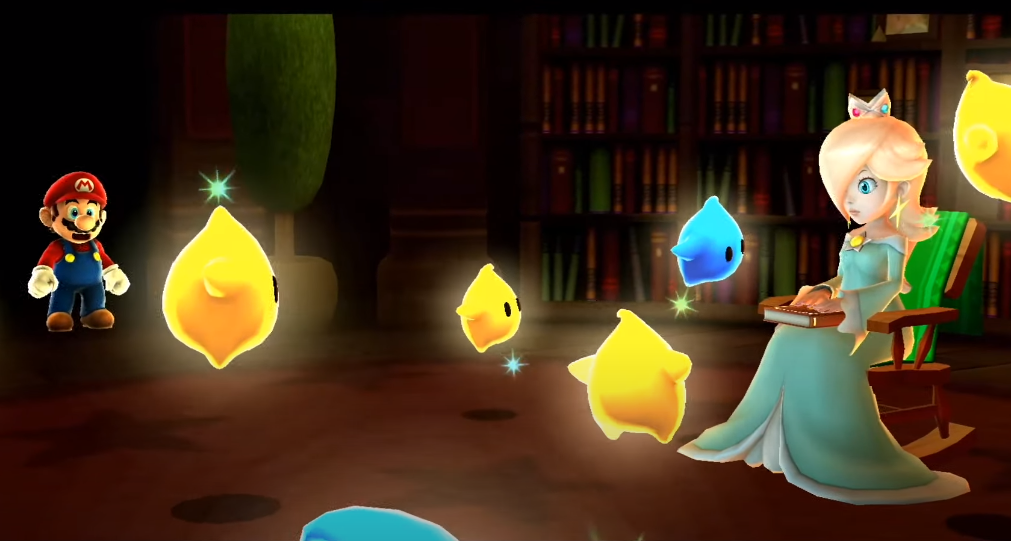
Rosalina's storybook guides the player through a softly-spoken narrative, starring a young girl and her journey to help reunite a lost luma with their missing mother. During which, they encounter a variety of other lost lumas that join them during their travels, eventually leading to the girl becoming a motherly figure to them across their travels. While the story is initially light-hearted, there comes a gradual shift as it's revealed that the young girl has been struggling to properly mourn and accept the death of her own mother. In the hope that the girl may never cry again, the luma she first meets finally comes of age, thereby transforming into a comet that the girl can use to visit her home once every 100 years. This finally allows the girl to process her grief, while providing a home for the other lumas before they, too, eventually become of age and transform one day.
While it is never explained explicitly in the storybook's narration, it's heavily implied that the identity of the young girl is that of Rosalina from many centuries ago.
So what does Rosalina's Storybook mean for the game's narrative?
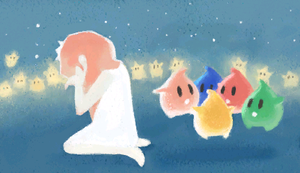
Putting it bluntly, Rosalina's storybook is a direct address of the games inherent themes surrounding death, acceptance and the cycle of life. Not only does it heavily recontextualise Rosalina's distant, yet enigmatic personality, but so too does it completely rewrite the player's conception of the various lumas that have transformed and helped Mario throughout his journey. Gradually, this revelation causes the player themselves to realise that not only is the Comet Observatory itself the very luma that first transformed to aid the mourning girl in the story, but so too are all the galaxies themselves some form of transformed lumas from many implied eons ago.
Rosalina's Storybook places a heavy reveal surrounding the game's space setting. This weight is finally applied pressure to during the game's finale, where a cataclysmic set of events amidst Mario and Bowser's confrontational showdown offset the universe into being destroyed. This spurs Rosalina to guide her lumas, so they can transform into a new universe in hopes of resetting the world and providing a positive future for Mario and his friends.
If it wasn't obvious, the original game's identity is intrinsically tied to Rosalina's character. If Nintendo were ever to adapt it to film, then it was essential they understood just how much of the film's weight would rely on her narrative execution. To that end, my overall critique of The Super Mario Galaxy Movie heavily correlates to just how much of the game's narrative motifs they were able to faithfully adapt, with bonus points going to whether they could also tie themselves back to the first film.
Movie Rosalina & Her Execution:
( )
)
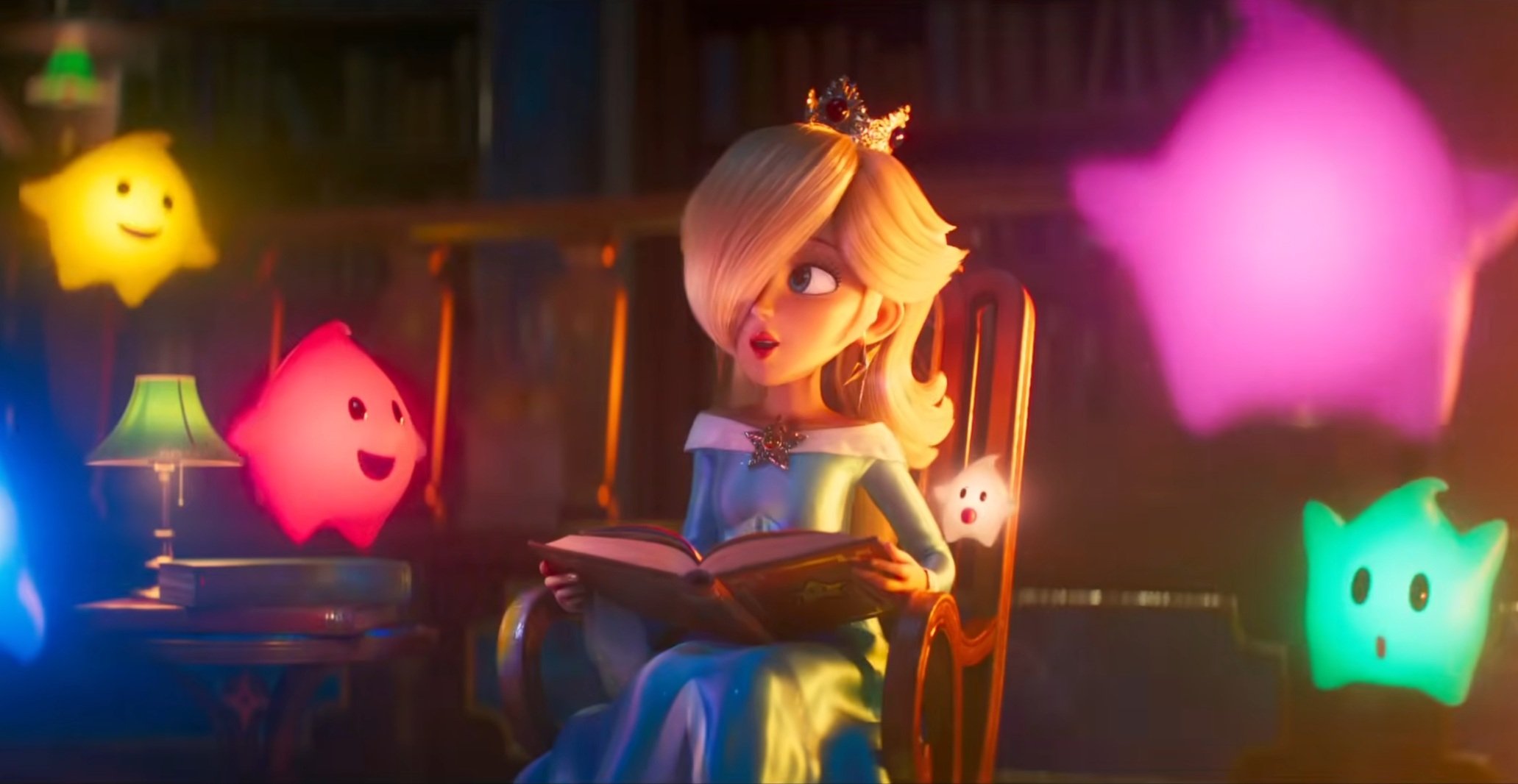
From the get-go, it's worth noting that many fans didn't hold faith that a studio that played it as safely as Illumination were going to address any of the game's darker elements, and this was especially the generial consensus surrounding Rosalina's upbringing. Even so, there's still much to praise regarding this Rosalina's new interpretation that I want to put forward now before extensively critiquing.
Including voice actress, Brie Larson's, incredible performance as the galactic princess, Rosalina is very much still a central focus in the narrative, with her execution still providing the same serene, yet motherly personality she'd exhibited from the original game.
However, for better or worse, this is where the film's faithfulness to her character stops, as immediate agency is placed when it ends up being Rosalina who is abducted by Bowser Jr., rather than Peach. This in-turn, prompts her lumas to seek out Peach, in the hope of setting things right. While on her journey, Peach gradually uncovers her own past, eventually realising that Rosalina's very identity is that of her own lost sister, finally filling the gaps of her origins that the first film was building up to.
Already, this is a stark difference from the game, but what exactly do I still like about it?
Besides being a soft confirmation of Rosalina and Peach relation to each other in the series, it also provides the series' very first occasion of the two meaningfully interacting with each other. Previously, their relationship had been left intentionally vague in the games, as Producer Shigeru Miyamoto and Director Yoshiaki Koizumi couldn't agree on how to connect the two princess. While it's been many years later, it seems that Miyamoto has finally been willing to shed light on this matter - at the cost of the film itself never spending its runtime to delve into Rosalina's gaming origins.
I'm a bit of an outlier when it comes to my opinion surrounding this narrative approach to her character. I personally enjoyed the film's approach to having Rosalina be Peach's older sister. To me, it not only further exemplified Rosalina's dutiful and mature personality with her upbringing, but it was also engaging to see Peach's moments of weakness as she realised she'd finally found family to lean on.
And while I've seen plenty of distaste surrounding Rosalina's new role as the damsel in distress, you could argue the film still went to an effort in portraying her as a powerful warrior. Notably, this could be seen through how her character placed her loved one's future above her own safety. To that extent, you could argue that her caring, nurturing personality from the original game is still intact, even if still largely sidelined.
But what of the other characters?
Narrative Themes, a Diverse Cast, & Missed Potential…
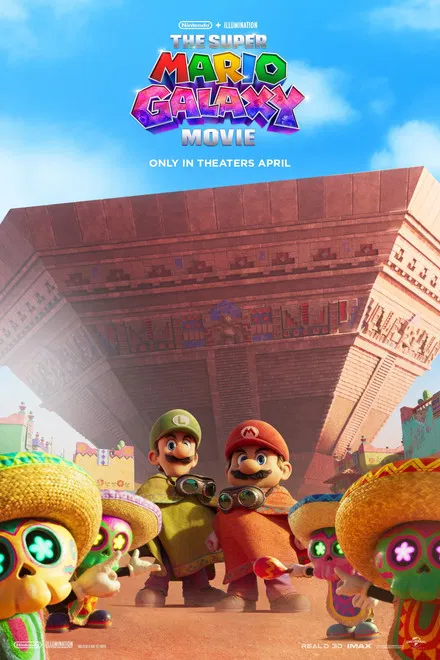
Possibly the strongest aspect of this movie's characterisation comes in its attempt at portraying themes of familiar and found family bonds. In fact, this was something I felt was Illumination's attempts at discarding the darker themes of its original game. Honestly speaking, if executed well, it could work, however, there's an emphasis placed on my saying "if" executed well...
The film juggles a sharp contrast of Mario and Luigi's strong bond with one another, where the two venture alongside a seemingly rehabilitated Bowser to stop Bowser Jr. Opposing this, Peach's character arc that's been gradually built from the prior film is a stark contrast, as she becomes more desperate and agitated to reconnect with her lost sister.
Already, this is a compelling setup that a strongly written narrative could utilise, and there are genuine moments where the film is at its strongest portraying these dynamics, however, it doesn't feel conscientiously addressed throughout the films runtime - neither does it feel like the film takes advantage of the tools it could've worked with from the game.
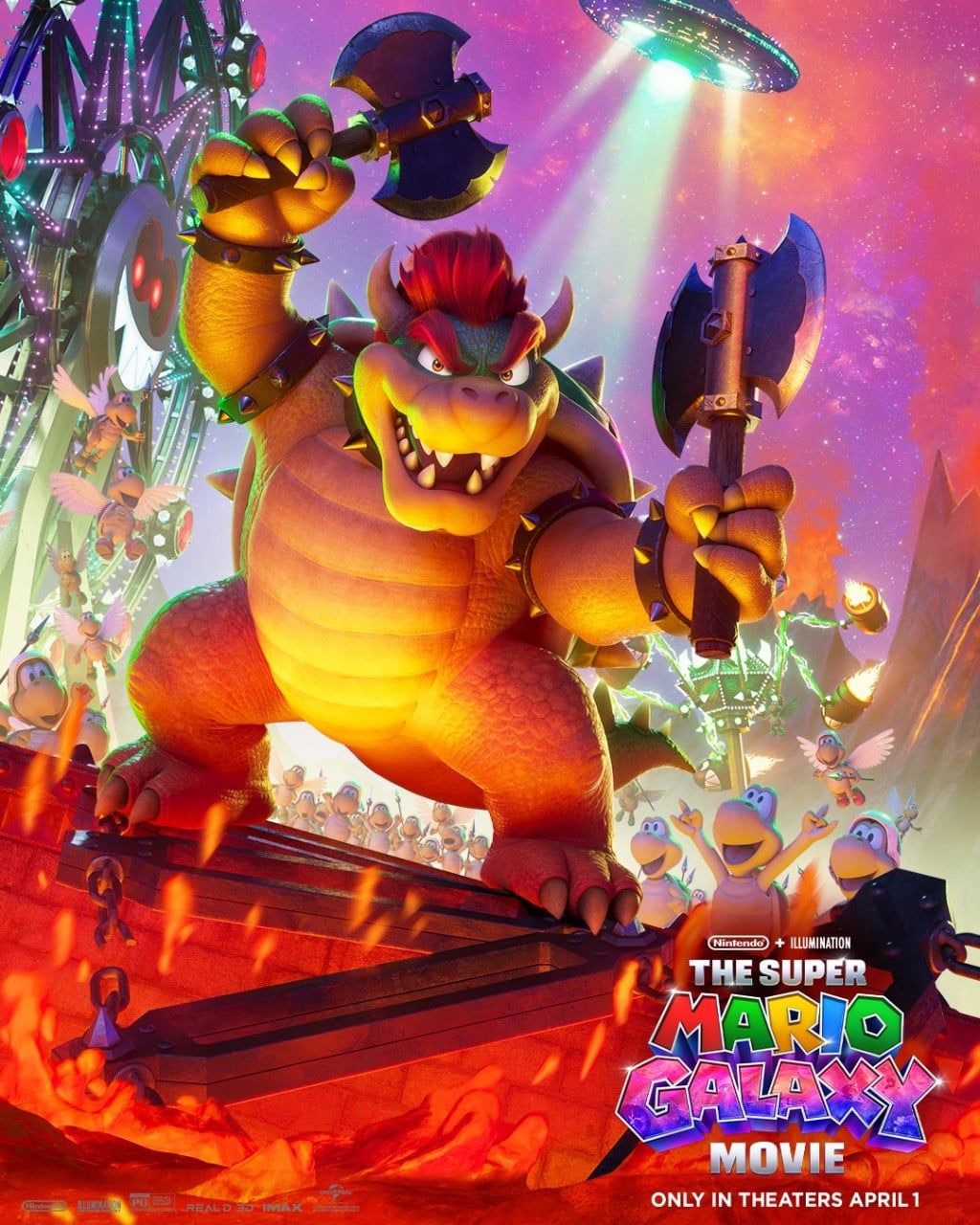
To begin with, one of the strongest dynamics the film actively explores is Bowser's rehabilitation process. There are plenty of effective jokes where Luigi is actively supporting him through his redemption, and it's incredibly engaging to see the stark contrast between both brother's treatment of the dethroned villain. After Bowser Jr.'s halfway-successful invasion of the Mushroom Kingdom, Mario and Bowser are able to mutually connect over the topic of fatherhood, cleverly linking back to the plumber's experiences from the first film. However, just when it seems that Bowser is ready for a complete redemption, the film finds a contrivedly written reason to separate him from the brothers before reuniting him with Bowser Jr., where he's then convinced into returning to his evil ways.
This is a dynamic, while still strong, could have arguably been explored a lot further to more effect. To exemplify this, there's a major point in the story where Bowser laments his evil ways after reuniting with his son, however once he's convinced to brush it off, he opts to actively engage in his villainy in favour of finding an opportunity to bond with his son. To that extent, you could argue the film places an internal hurdle of good Vs. evil for Bowser.
Between learning to meaningfully enjoy his time with the brothers, or to actively conquer the Mushroom Kingdom for revenge while bonding with his son, there is genuine merit in Bowser's fatherly presence and his internal character conflict. Regardless, it feels as if the film brushes off this character arc in favour of returning Bowser's villanous presence. If used effectively, it would have been nice for the film to explore the contrast Bowser and Rosalina place between "doing the right thing" and its ties to family. Had Rosalina's kidnapping been used to its full effect, I'd have personally liked to see the two interacting during the film's latter build-up around the subject of them both being parental guardians, which could've therefore reinforced the film's attempted themes of familial ties while also making good use of the new lore that the film brought to Rosalina's character.
This is similarly the case with Yoshi and Toad...
I've neglected to mention Yoshi's presence in this film, but rest assured - he is arguably the best aspect of this movie. Not only is he a delight to watch, but so too do all the comedic jokes surrounding his character land incredibly well. Perhaps it's a case of major bias, after having grown up loving Yoshi all my life, but if I have anything to praise regarding the Mario Galaxy Movie, it would be Yoshi's characterisation as a consistent comedic relief character.
Even so, I've always personally felt that to love something is to also critique it in good faith, and I'd be lying if I said there could have been more to explore surrounding his conflicted tensions with Toad. Very early on in the movie, Toad develops a disdain for Yoshi, and this is written off as a one-off gag, of his feelings that Yoshi is overshadowing his presence as a sidekick.
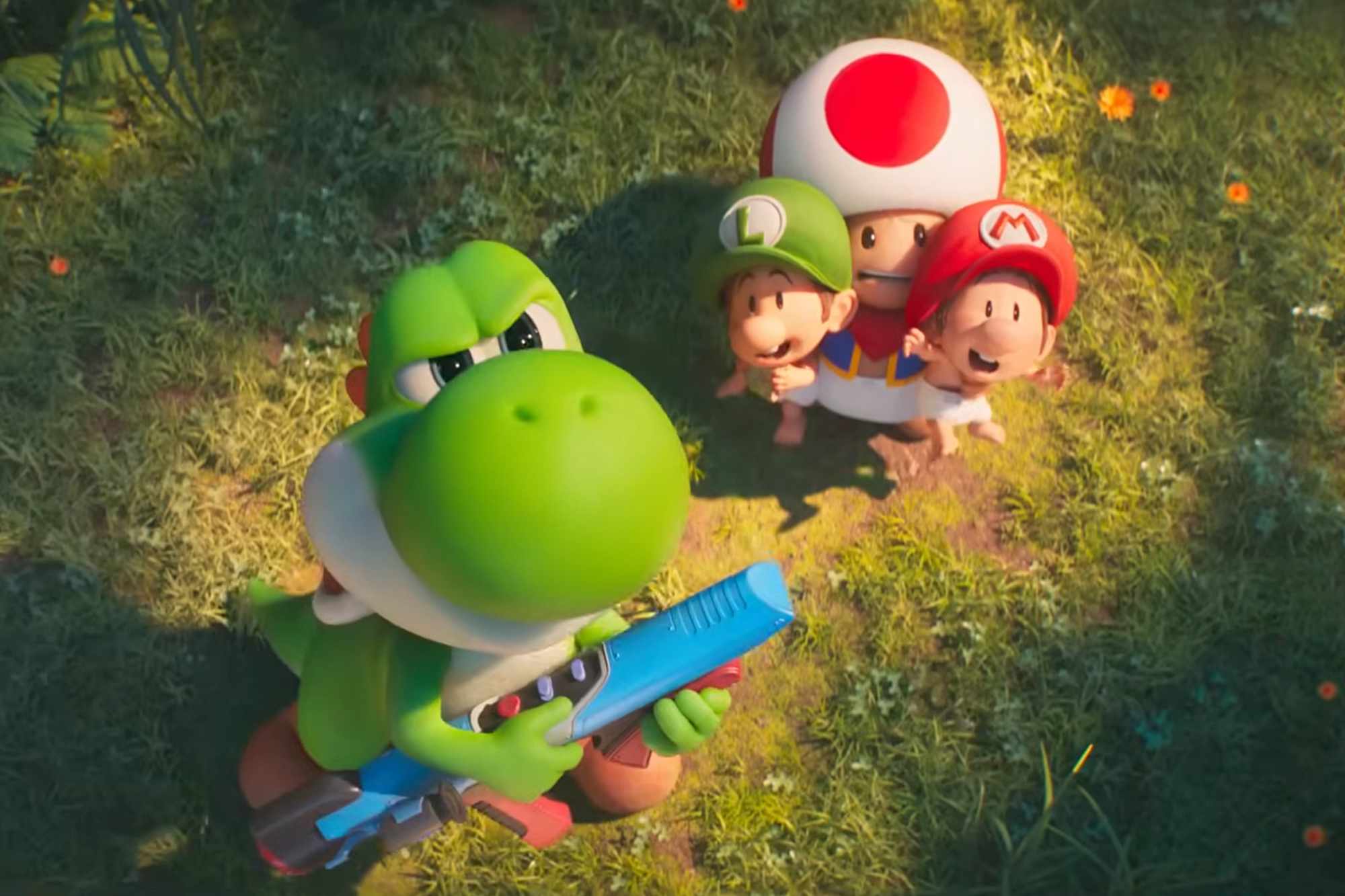
For all intents and purposes, Yoshi's presence in the movie could very well simiarily portray the idea of "found family" that Bowser's character arc strives to implement regarding his dynamic with the brothers. This is especially the case because unlike Toad from the first film, Mario immediately takes a liking to Yoshi's presence, and this kinship only grows stronger as the film develops. That being said, Toad's tolerance (or lack thereof) for Yoshi could have been explored further than a simple one-time joke.
One major point of agreement I've seen between fans and critics alike has been the inclusion of what I'll title as the "Yoshi's Island" segment and its nessecity to be included in the film's runtime. During this scene, Yoshi and Toad work together so they can restore the brothers to their former glory after Bowser Jr. succeeds in turning the two into infants, akin to their baby forms from the Yoshi's Island game. While the two initially struggle, they manage to come out on top eventually from the thread of Mario Odyssey's hyper-realistic dinosaur. Even so, there's never a direct address of Toad admitting to finally warming up to Yoshi's company, and neither is there a realisation on Yoshi's part that he's been invading upon Toad's boundaries.
The Yoshi's Island portion of the film serves to cleverly pay homage to the series' roots, both past and old. However, it could've been much more than that. Had there been even just one or two lines of dialogue between Toad and Yoshi to wrap up their conflict, this segment of the film could've arguably strengthened the overall themes of familial ties, further justifying the segment's space in this movie's already eventful runtime.
And now, onto the princesses (if it wasn't obvious, I'll never tire of ranting about them)...
Circling Back to the Princess Duo…
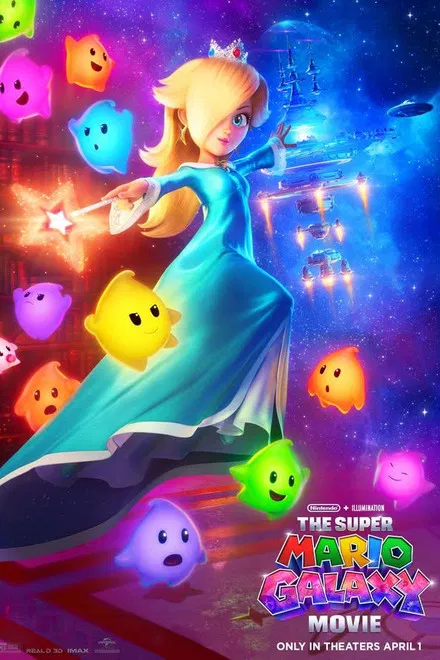
I've meandered long enough about Rosalina's execution in this film, but I want to finally address it's potential regarding its addressing of the story's central themes. Put bluntly, the reveal of making Rosalina Peach's lost sister should be one of the strongest examples surrounding the themes of familial ties and connections.
That said, it's a mixed bag - and I say this while wanting to compare how this newfound lore fares over that of the original Galaxy game.
Very early on in the film, my friend, who was watching the movie alongside me, jokingly whispered, "wait, is the luma dead now?" when they'd transformed into a launch star for Peach to hop into at the start of her journey. This was later never brought up in the movie again, and it's little things like this that begin to show the missed opportunities in the seemingly solid foundation that Galaxy film is being built upon.
With the implications of the lumas' transformations taken away the game's nuanced themes surrounding death and acceptance, you could still argue that Rosalina's deep ties to her lumas are instead meant to reflect that of the film's concept of connection and family. Still, it feels incomplete. Rosalina's sisterhood to Peach is incredibly endearing, however it feels more like a means to an end rather than something the film actively explores. Adding onto this, there's very little explanation given for how Rosalina became the mother to the lumas after being separated from Peach, therefore feeling like a missed opportunity to even imply she had Galaxy's original backstory to begin with. Frankly put, it feels as if Nintendo and Illumination favoured adding new lore for the two princesses rather than taking advantage of the already strong concept they could have worked with.
Still, there is hope that I feel is worth considering. It's worth noting the film neglects to bring up Rosalina's journey to accept her mother's death as she did in the game. This undoubtedly puts the nature of Rosalina's Storybook being adapted in the future into hot debate. The revealed sisterhood of the two princess doesn't necessarily take away from Rosalina's lore, but instead could potentially add to it if Illuminations were to ever explore it in the future.
Whether the Mario films' canon is one-to-one to the games or not, there's still hope for one of the franchise's best stories to be actively explored. That being said, it goes without saying that this movie was ideally the best chance to have reinforced its core themes through taking advantage of Rosalina's original storybook. It's still a shame that while they were willing to further flesh out a fan favourite character, they didn't fully commit to going all the way with her to better the film's narrative. For better or worse, it feels as though Rosalina's characterisation has been sacrificed in favour of addressing Peach's lost sense of identity from the first film, almost making her role in the film feel more like a scapegoat than an considerate homage to the series legacy.
The Obligatory Fox McCloud Rant:
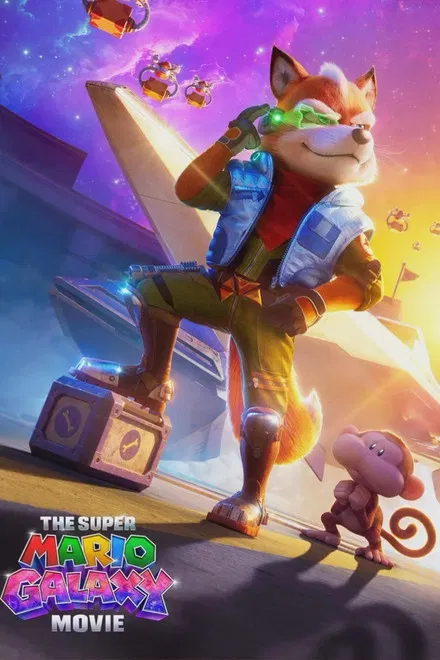
Guess who wrote their entire entire blog post without addressing Fox's inclusion in the movie whatsoever? THIS GUY!!!!
There's not a lot I can realistically say regarding Fox's inclusion in this film besides how funny it is he had more screentime than Rosalina. I remember initially being incredibly sceptical regarding his inclusion when got the poster reveal for him, and retrospect has made me realise his presence in the film does very little to fit into the themes of Mario Galaxy to begin with BUT, there is a silver lining-
And it's that I think that despite never having grown up playing the Star Fox series myself, I think the Illuminations brand of humour works incredibly well with Fox, and if I were to honestly critique his inclusion in this movie in any way, I'd want for the "potential Smash Bros Movie" discourse to cease immediately because of his inclusion. That said, I suppose that's a personal rant for another day at another time (maybe even in another post), so I'll spare it from being here.
Rest assured, I Like Fox's inclusion in this film. Even if it's incredibly out of left-field, I'm still left feeling satisfied with how he was written and his dynamics with the rest of the cast bounces incredibly well. At the very least, I want to give this W to the few Star Fox fans that exist, because I'm sure it must feel incredibly gratifying to finally see him in the big screen from a seemingly dormant game franchise.
OK that's the obligatory Fox McCloud section done. ONTO THE CONCLUSION!!!!
My Final Thoughts: Stellar Movie; Weak Adaptation.
One of the main topics of interest I explored in-depth with my friend upon coming out of my same-day rewatch for the film, was the legacy that the Super Mario Galaxy movie had to live up to in comparison to its prequel film. Because had "Galaxy," been a regularly numbered "Super Mario Bros, Movie 2" movie and stayed true to the spirit of the first installment by cross-referencing set pieces across the entire franchise like before, I'd arguably be less critical of this film to begin with.
Except very issue with being a "Galaxy" movie is that it intrinsically ties itself towards one of Mario's biggest outings to date. Not only is Super Mario Galaxy (the game, not film :P) a beloved classic, but it also contains some of the most emotionally gripping narrative highs to date in the series. Whereas the first film could get away with promoting its overall series legacy by introducing an array of iconography as a result of its open-ended framework, The Mario Galaxy Movie aims for a "bigger is better" approach that ignores what originally made its gaming counterpart so special.
There's so much I have to say about this film, and much of my critiques come down to how I feel this movie best reflects the nature of the game it wants to adapt. During the film's earliest announcements, my biggest hopes surrounding this movie were two things: I didn't want the film to mischaracterise Yoshi, and neither did I wish the same fate for Rosalina.
These are two characters that I've held a deep fondness for since early childhood, and while I'm entirely content with the former - the latter's execution is one that while I still see the positives for, I find myself agreeing alongside the fanbase's qualms surrounding Rosalina's newest interpretation.
While I still see the abnormal missed potential with this film's execution, it doesn't stop me from adoring the wonderful performances, settings, coreography and characters that this film series has brought to life.
That being said, this film is a flawed masterpiece. It's a personal 10/10 I'd watch and rewatch time-and-time again BECAUSE of my fondness for this franchise, but I'm also painfully aware that every time I experience it once again, I'll only find more reasons to critique it. My only real desire is that Illumination and Nintendo are willing to explore this cinematic interpretation of Super Mario more profoundly in the future. Because had this film had just a few more tweaks to the script, I genuinely believe it would've been far better received.
That being said, I do wonder where exactly we can go from here. Personally speaking, I've always felt that the Mario Galaxy duology games would have been the pinnacle of expansive settings to the films to explore of the Mario games thus far. While the post-credits scene of the second film sheds some light over where the Illuminations mario-verse could go, it also brings a lot of debate into exactly how they could possibly one-up the story in scale.
That being said, if they ever gave us a Rosalina spin-off show where she reads a story of the Mario cast to her lumas for each episode (alongside a dedicated episode on her original game's backstory), I would eat that up like the luma babies eating starbits. Please LET ME COOK NINTENDO!!!